Hemal Arora

Hi! I’m Hemal, a senior at Stanford studying Electrical Engineering. I’m an undergraduate researcher at the Interactive Perception and Robot Learning Lab, advised by Prof. Jeannette Bohg.
I’m interested in robotics, simulation, and learning for perception and control. I enjoy working on problems at the intersection of research and engineering: developing new methods, building end-to-end systems, and testing them on real hardware.
Looking for Summer 2027 internships in Robotics and Physical AI.
LinkedIn Email CV Google Scholar GitHub
Selected Work
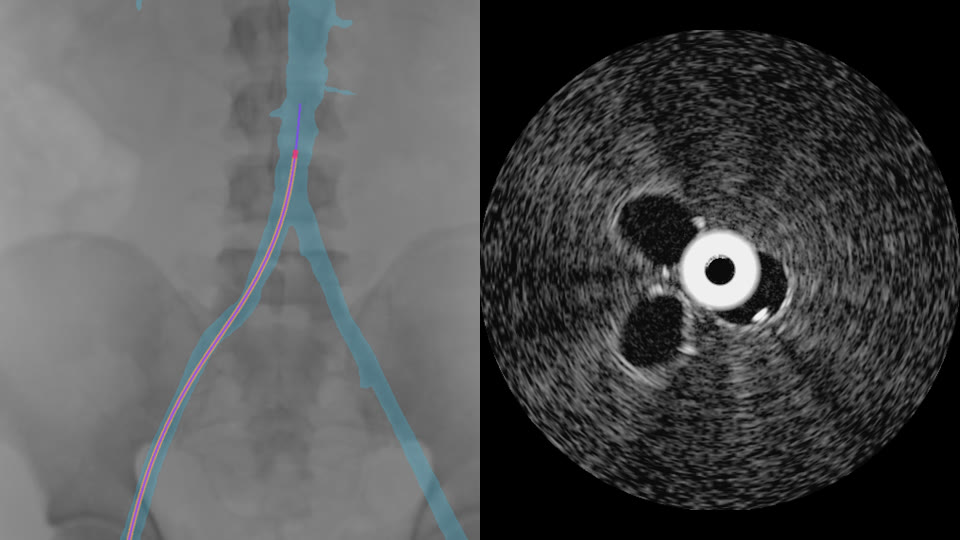
Mosaic Intelligence Labs, Inc. (Stealth Startup)
Built simulation, synthetic-data, and model-training pipelines for endovascular surgical perception, spanning X-ray fluoroscopy, intravascular ultrasound (IVUS), and catheter navigation. Focused on calibrated sensor simulation, sim-to-real transfer, and hardware-in-the-loop testing of factor-graph based localization and mapping algorithms.
Multiply Labs
Worked across robot learning, motion planning, and vision for a robotic cell-therapy manufacturing cluster. Developed a motion-planning system in Isaac Sim, trained and evaluated Action Chunking Transformer (ACT) and Diffusion Policy models for precise manipulation on a UR10e, and shipped production vision infrastructure for auto-calibration and data collection.
PickleBot
Built an autonomous pickleball-playing mobile manipulator that tracks an incoming ball, predicts its intercept, repositions a mobile base, and executes velocity-controlled strikes with a Franka FR3. The system continuously replans at 100 Hz with OptiTrack tracking and joint-space Hermite trajectories constrained by hardware velocity limits.
Research
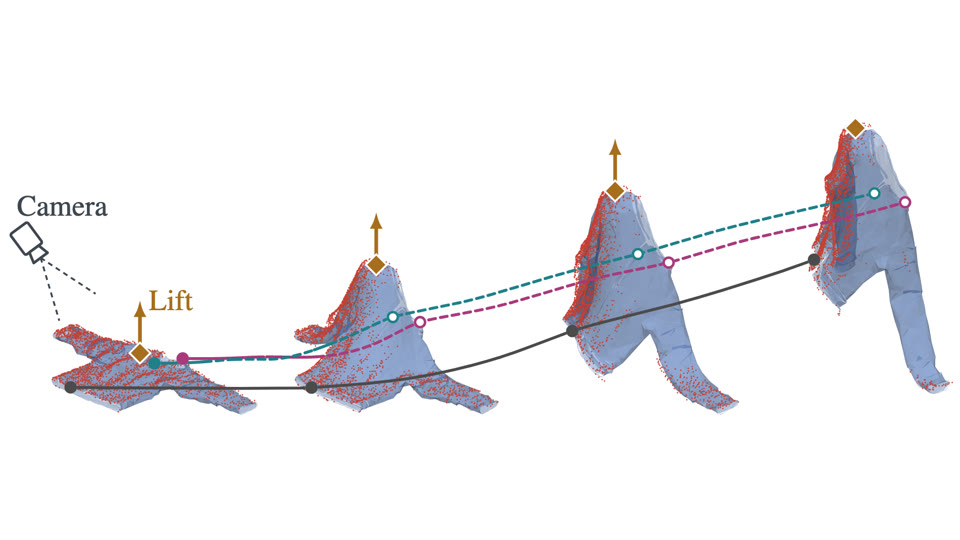
ClothAtlas: Joint Garment Identification and State Estimation under Self-Occlusion
ClothAtlas jointly identifies a garment from a library of canonical meshes and estimates its complete 3D configuration from partial point clouds. A shared graph-conditioned flow-matching model generalizes to unseen mesh topologies without retraining and preserves vertex identities through self-occlusion; on real garments, ClothAtlas localized 85.1% of occluded grasp targets within 10 cm, compared with 36.2% for dense descriptor matching.
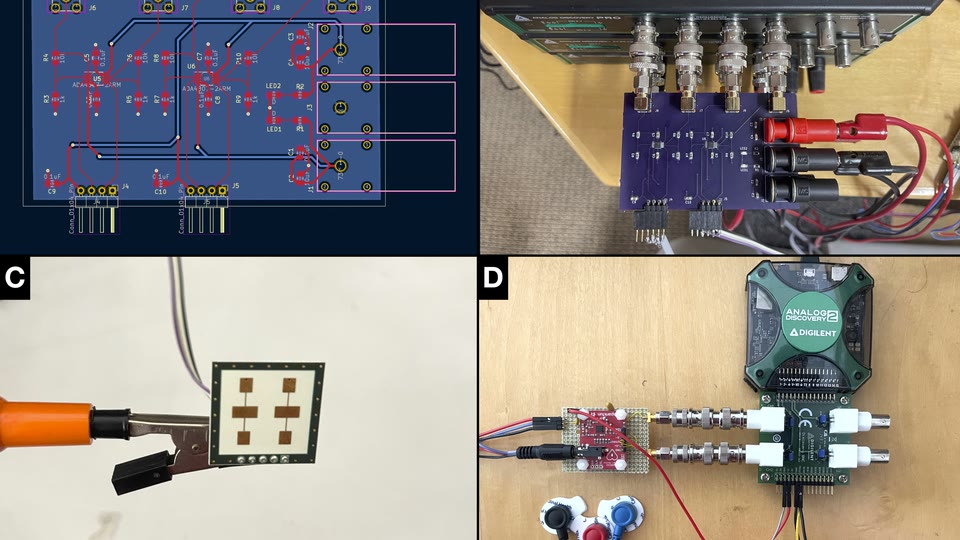
MM-Wave Radar Vitals Sensing: Towards Non-Contact Cardiac and Respiratory Gating for MRI
Developed hardware and signal processing for a four-channel 24 GHz mm-wave radar system for non-contact cardiac and respiratory sensing in MRI, including custom PCBs and an SSA/ICA-based waveform-separation pipeline. Evaluated radar-based physiological sensing as a step toward contactless cardiac and respiratory gating.